Over the past year I’ve talked to a lot of app teams, and two things come up so often that I finally decided to write them down.
The Small Business Program
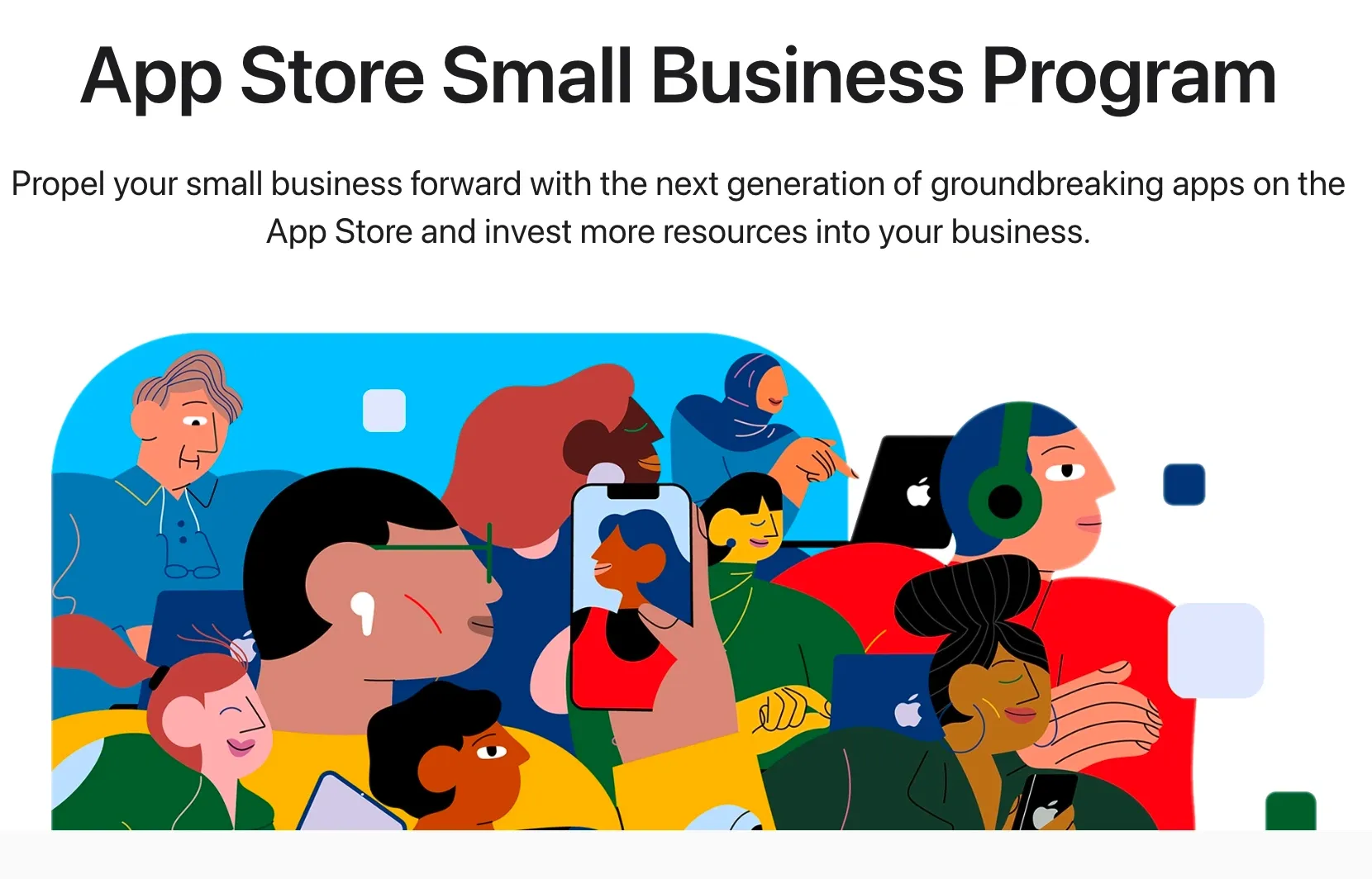
Apple takes 30% of what you sell. That’s the standard rate, and it’s what a new app on the App Store pays by default.
What a lot of developers don’t realize is that there’s a second rate. The Small Business Program brings Apple’s cut down to 15%, so you keep 85 cents on the dollar instead of 70. Same App Store — half the commission.
The catch is that being a small app doesn’t put you in it. Apple doesn’t look at your revenue and move you over. You have to sign up yourself.
You qualify if your apps earned you up to $1M in the previous calendar year, or if you’re brand new to the App Store. Worth reading that number carefully — it’s what Apple actually paid out to you, after its own cut, not what customers spent. The real ceiling is higher than it first looks.
And when you cross $1M later, you simply go back to the standard rate on new sales. If yoy happen to drop under again - you can rejoin the following year.
Enroll in the Small Business Program Sign in as the Account Holder, accept Schedule 2, and list your associated developer accounts. Learn more about the program Apple's overview of eligibility, timing, and how the reduced rate is applied.Subscription groups
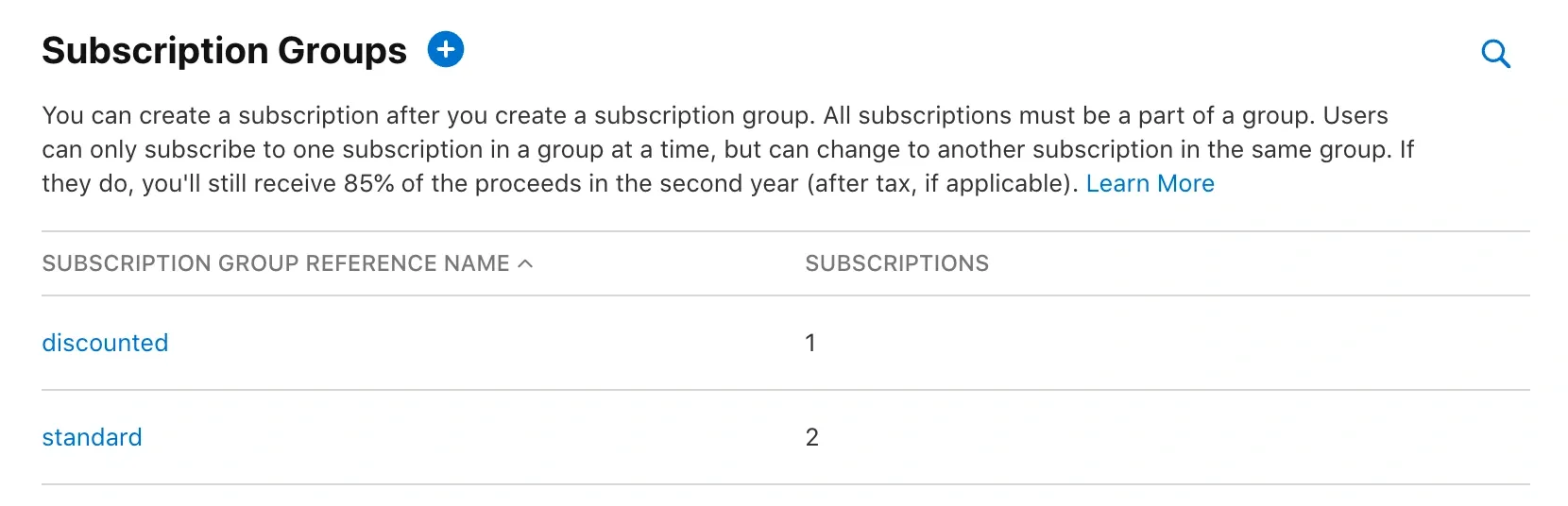
A subscription group holds all the versions of a single subscription — weekly, monthly, yearly, etc. A customer can only have one active subscription per group and can switch between any subscription within the group freely.
Most setups I look at have every subscription the app has ever created sitting in a single group — the standard and discounted plans. All of it in one list.
That’s not a neutral choice, because inside a group users can move between any two subscriptions freely — up, down, or sideways. Someone paying for your top tier can open Settings, pick the cheapest thing you sell, and roll onto it at their next renewal.
It also leaves you nowhere sensible to put a reward. When you want to give someone a subscription — for a referral, for sticking around, for whatever — the instinct is to create a cheap product for it. Drop that in the main group and you’ve just published a discount to your entire user base.
The fix is two groups. Keep your standard plans — the ones you sell openly and want people moving between — in one. Put the discounted ones in another: the referral reward, the partnership rate, the win-back offer. A regular subscriber never sees that second group, so nobody drifts onto a cheap plan because it happened to be on the list. And when you do want to hand someone a discounted subscription, there’s already a sensible place for it to live.
Check your groups in App Store Connect Open your app, then Monetization → Subscriptions to see how your groups are set up. Learn more about subscription groups Apple's guide to creating groups and adding subscriptions to them.Neither of these is exciting work, which is probably why they keep getting skipped. But one decides how much of every sale you actually keep, and the other decides whether you can still hand someone a discounted subscription without offering it to everybody. Both are much cheaper to sort out now than once real subscribers are sitting on the wrong plans.